
Blog / Frederick Subaru Dealer

Subaru Forester Hybrid vs Honda CR-V Hybrid

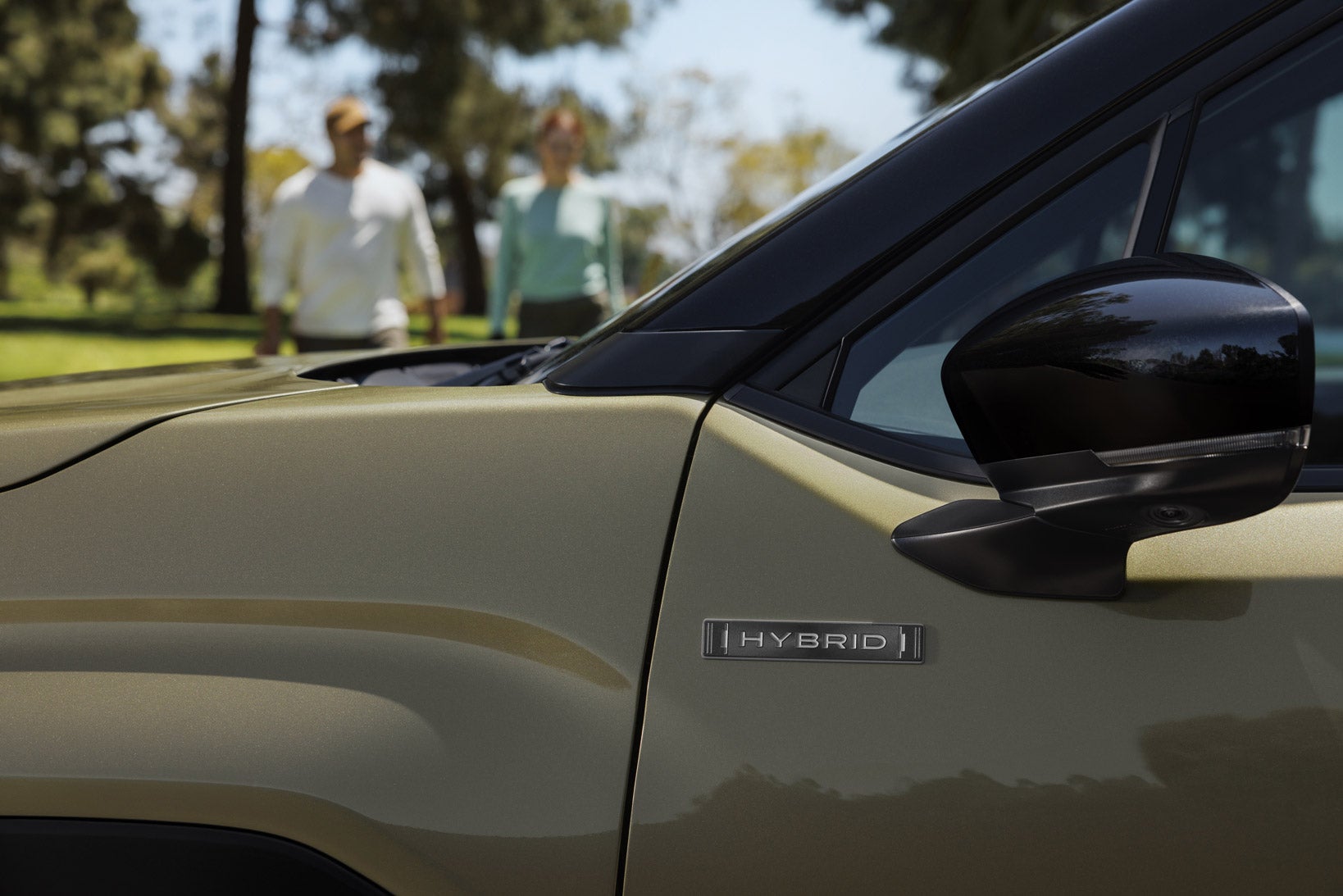
Green Subaru Forester Hybrid

In days past, a big question people asked was, “What’s the gas mileage?” With modern innovation in the auto industry, some are asking, “Do I need a gas vehicle at all?” The advent of electric vehicles has shaken things up quite a bit, but there are still people who want to embrace the future while enjoying a bit of what makes the past special. For those customers, there are vehicles like the Subaru Forester Hybrid. It’s not the only car of its kind, though, so any responsible buyer will compare it to similar models, and the Honda CR-V Hybrid is a strong competitor.

So which model comes out on top? We encourage you to weigh the differences and even check out a Subaru Forester Hybrid review or two to form an educated opinion. For now, let’s get behind the wheel of both models to see which one is worth the purchase.

Performance & Hybrid Powertrain Comparison

Performance isn’t all about horsepower. It’s also about how a vehicle handles daily driving, weekend adventures, and shifting weather (something we’re quite familiar with in Maryland). Here’s how the two contenders stack up:

Subaru Forester Hybrid:

  • Symmetrical All-Wheel Drive comes standard on every model
  • Predictable, balanced handling in inclement weather and on uneven terrain
  • The BOXER® engine layout provides enhanced stability thanks to a lower center of gravity

Honda CR-V Hybrid

  • Stock models come with front-wheel drive, but all-wheel drive is available as an upgrade
  • Smooth transition between highway and city driving
  • Slightly higher horsepower under certain configurations

In short, the Forester stands out with traction and control. Standard all-wheel drive is a big plus here.

Fuel Efficiency & Everyday Driving

Hybrid vehicles are designed to be fuel-efficient. In that regard, both models deliver.

Drivers can expect these features from both models:

  • Strong combined-MPG ratings
  • Improved efficiency during stop-and-go traffic thanks to regenerative braking
  • Smooth transitions between electric and gas power functionality

For drivers searching for a Subaru Forester Hybrid for sale, the balance of fuel efficiency and all-weather capabilities makes a compelling case for the car.

Safety Features & Driver Assistance

Subaru and Honda alike bring their A-game to the lot with safety features, thanks to innovative technology integrated into their models.

Subaru EyeSight®Driver Assist Technology:

  • Comes standard
  • Adaptive cruise control
  • Lane centering and lane-keep assist
  • Pre-collision brake functionality
  • Throttle management

Honda Sensing® Technology:

  • Collision-mitigation braking
  • Road-departure mitigation
  • Adaptive cruise control
  • Lane-keeping assist

At Frederick Subaru, we place safety above all else, and Subaru models have proven again and again they’re top in their class in this regard. In fact, Subaru consistently ranks as an IIHS Top Safety Pick.

Interior Comfort, Space & Practicality

Safety is important, but comfort is still a big priority for many buyers. While both the Subaru Forester Hybrid and the Honda CR-V Hybrid both have clear comfort features, their priorities differ.

Subaru Forester Hybrid:

  • Upright seating position that provides excellent visibility
  • Wide windows that contribute to an open-cabin feel
  • Flexible cargo space for all manner of lifestyles
  • Durable design elements that are great for outdoor adventures

Honda CR-V Hybrid:

  • Refined design and comfortable seating
  • Competitive cargo space
  • Intuitive center console and storage spaces

Our customers frequently tell us the Forester is one of the most family-friendly vehicles they’ve tested, regardless of lifestyle particulars.

Technology & Infotainment

This isn’t the 1990s anymore. We don’t have to sit in silence during car rides. We have ways of making journeys easier and safer. Modern drivers expect their vehicles to keep them connected with technology, and our two contenders deliver. But which one provides the better solution? Let’s take a closer look.

They both offer:

  • Touchscreen displays
  • Apple CarPlay® and Android AutoTM smartphone integration
  • Driver information screens
  • Voice controls and convenient steering-wheel-mounted buttons

Though these features are shared between the two, Subaru’s infotainment setup has long held a reputation for being intuitive and for minimizing distractions for the driver. Access to information, settings, and music is quick and simple in the Forester Hybrid, allowing you to focus on the road.

Reliability, Longevity & Ownership Experience

Long-term value is a big draw for any vehicle, possibly even overshadowing the sticker price. So how do these cars stack up against one another?

Subaru-Specific

The brand has a strong track record for durability and reliability in the long-term. The addition of all-wheel-drive in even base models is a big plus for value, and the overall engineering has earned Subaru an impressive reputation.

Hybrid Benefits

Hybrid cars aren’t just the next step in car design. They offer substantial differences from traditional cars. Their regenerative braking means fewer brake replacements are necessary, fuel costs over time are smaller, and they don’t require any more maintenance than a traditional car.

Both brands offer enticing perks for efficiency, but only one brand has proven consistently that their cars provide the better value. 

The Verdict: The Subaru Forester Hybrid

We’ll begin our closing argument with a snapshot of comparisons between the two models.

The Forester Hybrid offers these advantages at a glance:

  • All-wheel drive comes standard
  • A more rugged design that’s ready for adventure
  • Subaru’s strong reputation for all-weather performance

This is why business competition is great for the consumer in the end. Both cars are solid choices, because their makers are driven to provide the best option. However, there can only be one victor. The Subaru Forester Hybrid offers a fantastic balance of efficiency, capability, and comfort. Eco-conscious drivers will be hard pressed to find reasons to criticize this solid hybrid model. While the Honda CR-V Hybrid offers several impressive features, it falls short compared to Subaru’s model.Ready to take the next step? Find a Subaru Forester Hybrid for sale at Frederick Subaru, where we can show you all the features of a car that serves your whole family. If there are none on the lot when you visit, we’ll take you through our stress-free ordering process to get you behind the wheel as soon as possible. Get in touch with us or take a test drive today!

Posted in:

Related Posts

Two young girls getting into a Subaru Ascent

Which Subaru Is Right for Your Growing Family? Finding the Best SUV for Families

You know the moments. The rear-facing car seat that pushes the front seat into the dash. The stroller and diaper bag that won't both fit in the trunk. Most roundups just hand you “the best SUV for families” and move on, which doesn't help when two Subarus both seem to fit. This guide covers four common situations: (1) one baby on a tight budget; (2) daily car seat duty; (3) long road trips with gear; and (4) needing three seats across. Think of it as a shortcut to the best car for new parents in your situation, rather than a strict ranking. What Every Subaru Gives You, No Matter Which Model You Choose Every Subaru comes standard with Symmetrical All-Wheel Drive (standard on all trims), Subaru EyeSight, adaptive cruise that holds a following distance on I-70, and pre-collision braking. When it comes to safety, Forester, Outback, and Ascent all currently carry the IIHS TOP SAFETY PICK+ award, the highest IIHS gives. Subaru safety features shift by model year and trim, so check the current listing before buying. That baseline is a big part of why Subaru shows up so often in searches for the best SUV for families… and that’s before you get to individual models. If You Have One Baby and Want to Keep Your Monthly Payment Low For many situations, the Crosstrek and the Impreza are a good answer. Consider it the right fit if: You have one child, one car seat, and do mostly city or commuter driving A second child's coming, or you regularly travel with a full stroller and luggage Subaru Crosstrek car seat installation is straightforward, and for many chasing the best car for new parents, that's something that holds enormous appeal. Not sized right? Subaru Crosstrek vs Forester is the next read. If You're Loading Car Seats Every Single Day For daycare drop-off, preschool pickup, and everything in between, the Forester is the default recommendation. Its tall build, square doors, and high roofline mean less hunching to lower a baby carrier onto its base. LATCH anchors sit right where you'd want them, easy to reach with a seat already installed. Subaru Forester cargo space behind the rear seat runs 27.5 cubic feet on most trims (29.6 on base), enough for a full-size stroller without folding it down. Consider it the right fit if: You have one or two kids, daily daycare or preschool runs, easy car seat access matters most You need three car seats across, or regularly carry extra passengers Subaru Forester car seat access is a big reason this model shows up on so many best Subaru for families lists. If You Take Long Drives and Carry a Lot of Gear Rather than an upgrade, the Outback is the alternative to the Forester: a different shape for a different kind of trip. For parents, a lower-load floor makes lifting a stroller easier, and a longer cargo area holds a pack-n-play plus luggage. There’s a tradeoff, though: a lower roofline means more bending to buckle a child in. If you’re deciding between the Outback or Forester, it comes down to one question: Are you lifting a car seat daily or loading up for road trips monthly? The former favors the Forester's height, the latter the Outback's cargo length. Subaru Outback cargo space behind the rear seat comes in at 34.6 cubic feet, with 80.5 cubic feet once the seats fold flat: more than either the Crosstrek or the Forester offers. Consider it the right fit it: You have two kids, take frequent road trips, or cargo length matters more than roof height Because you’re dealing with a car seat every day, your back is asking you for some relief Subaru Outback car seat installation is no harder than the Forester's. It’s just done from a lower position. If You Need Three People Across or a Third Row With three or more kids, or regular carpool duty, the Ascent is the answer. Fitting three car seats across the second row is possible, and comfort depends on bench seating versus captain's chairs: a bench keeps three side by side, captain's chairs open an aisle but drop you to two in the middle. Third row access with a car seat already installed in row two is the thing families discover too late. The Ascent's second row tips and slides even with a car seat base left in place. Subaru Ascent cargo space behind the third row measures 17.8 cubic feet: stroller-and-diaper-bag territory. Behind the second row it's 43.5 cubic feet, and folding everything down opens up 75.6 cubic feet total. Consider it the right fit if: You have three or more kids, are on regular carpool duty, or make frequent trips with extended family Cargo behind a full third row is tight, so a roof box or hitch carrier is common. Subaru Ascent third row access and car seat compatibility usually decide this faceoff. Searching for the best SUV for 3 car seats? The Ascent's second row was built with that circumstance in mind, and Subaru safety features cover every seat. Quick Comparison Here are the best SUV for families question, broken down by model: Crosstrek: Best for budget and size. Skip it if a second child is on the way. Forester: Best if you're buckling kids in daily. Skip it if you need six-plus seats. Outback: Best if road-trip cargo beats roof height. Skip it if daily lifting is the concern. Ascent: Best for three car seats across or a working third row. Skip it if you rarely carry more than two. Which Subaru Is Right for You Start with the number of car seats you need today, then let your daily routine decide the shape. Loading and unloading often matters more than raw cubic feet. That's the test behind picking the best Subaru for families like yours. We further advise bringing your car seat to the dealership and installing it in the vehicle you're considering. It takes ten minutes and answers your most important questions better than anything else. Talk to our team to set up a test drive with your gear in tow. Whichever model you land on, the best SUV for families is the one that matches how you load it every morning, and the best Subaru SUV for a growing family is simply the one sized to your family right now.

A low-angle photo of the back of a blue Subaru Outback

Are Subarus Reliable? A College Car-Buying Guide

Are Subarus reliable? The answer, per the received wisdom in the car-buying community at least, is a clear “yes.” It’s good to know that this received wisdom is derived from a proven industry track record. There’s a caveat, however: This fabulous reputation only holds if the car gets its scheduled maintenance, which matters more when a college student is behind the wheel. “Reliable” means something different when the car is 90 minutes away at school and you're not there to catch a funny noise before it becomes something definitely unfunny. Where Subaru Officially Ranks Are Subarus reliable enough to trust beyond brand reputation? The third-party numbers say yes, though they're worth keeping separate rather than blended into one score. Consumer Reports named Subaru the top brand on its 2025 Overall Brand Report Card for the second year running, a score built from road-test results, predicted reliability, owner satisfaction, and safety data. On reliability alone, Toyota reclaimed the top spot for 2025, with Subaru landing second: a score of 63 out of 100 against Toyota's 66. Separately, RepairPal's Subaru reliability rating lands at 3.5 out of 5.0, 14th out of 32 brands, with an average annual repair cost of $617: a bit below the $652 industry average. Then there's Subaru's own number: 97% of Subaru vehicles sold in the last 10 years are still on the road today, pulled from registration data. It says something real about longevity, but it doesn't prove every single car ran trouble-free. For a college buyer, the ratings above say more about day-to-day Subaru reliability than anything more specific. What Makes a Subaru Hold Up A few key engineering choices explain the brand’s reputation for rugged reliability: The “boxer engine” lays its cylinders flat and opposed instead of stacking them in a line, lowering the engine's center of gravity and cutting the vibration that wears out mounts and seals over time. Symmetrical all-wheel drive comes standard on nearly every Subaru, not as a pricey trim upgrade, so the drivetrain gets the same engineering attention across the whole lineup. Subaru sells a narrower lineup than most brands, so technicians see the same platforms constantly and common issues get caught fast instead of guessed at. These design and engineering choices are a big part of why the Subaru reliability rating holds up so well. Browse our current new inventory to see which models are on the lot right now. Is a Subaru a Good Car for a New Driver? For a new driver headed off to school, the practical considerations matter as much as the ratings. Standard all-wheel drive means a first snowfall doesn't turn into a lesson in oversteer. The system reacts to slip before most new drivers would even notice it. Subaru's SUVs and hatchbacks are sized to be easy to see out of and easy to park, with thin roof pillars that help in a packed dorm lot. On safety, the 2026 Forester, Outback, and Ascent all earned the IIHS Top Safety Pick+ award, the organization's highest rating. Stop by the showroom to sit in a few trims and see how the visibility and sizing feel firsthand. The Weak Points Skipping this section would turn this guide into a brochure: Head gaskets were a real problem on the naturally aspirated 2.5-liter EJ25 engine: mainly 2000 to 2009 Legacy and Outback models, and 1999 to 2011 Forester and Impreza models, with failures often showing up between 100,000 and 150,000 miles. Subaru redesigned the gasket and had largely resolved the issue by 2012, so this is a used-model concern only. Turbo Subarus were rarely affected. The CVT, Subaru's automatic transmission, draws mixed reviews. Earlier units, generally those built before the late 2010s, show up more often in shudder and valve-body complaints than newer ones, though it varies by model and even by VIN. Longevity comes down to fluid changes done on schedule and avoiding hard, repeated acceleration. First-time owners are often surprised that the CVT and rear differential need their own fluid changes, separate from the engine oil, and that spark plugs take longer to swap than on most cars; this is because the rear cylinder bank sits tucked against the frame rail, turning a quick job on an inline engine into extra labor on a Subaru. What Reliability Costs to Maintain Are Subarus reliable without any upkeep? Well, everything needs upkeep. Reliability is, in reality, a maintenance schedule someone has to follow: RepairPal puts the average annual repair cost at $617, a bit below the $652 industry average, with about 0.3 unscheduled shop visits a year versus 0.4 for the average vehicle. The bigger risk for a college car usually isn't the car; it's a student who skips an oil change during midterms or ignores a tire light because it's easier than dealing with it between classes. The fix to all this costs nothing: Set up service reminders before move-in, and put the mileage intervals in both of your phones. How Long a Subaru Realistically Lasts How long do Subarus last, practically speaking, across four years of college? A well-maintained Subaru can reach 200,000 to 250,000 miles. A student driving to campus, home for breaks, and to a part-time job might rack up 10,000 to 15,000 miles a year, or 40,000 to 60,000 across four years: a small fraction of that lifespan, even counting winter driving and parking-lot dings. Subarus also hold their value well. Independent resale data puts the brand among the top few mainstream brands for 5-year retained value, usually just behind Toyota. A well-maintained Subaru at graduation is worth selling or trading in, not unloading for parts. So how long do Subarus last? It has less to do with luck than with regular maintenance. What to Check Before You Buy Before signing for a used Subaru, check for: Full service history, especially oil changes and CVT fluid services A pre-purchase inspection from a mechanic who knows Subarus specifically Remaining factory or powertrain warranty coverage Records showing the AWD system and differential fluids were serviced on schedule If digging through paperwork isn't appealing, a certified pre-owned Subaru is the lower-risk path. Every one passes a 152-point inspection and comes with a factory-backed 7-year/100,000-mile powertrain warranty and 24/7 roadside assistance, coverage a private-party used car won't have. Browse our current certified pre-owned inventory to see what's available right now. Reliability Is a Plan, Not Just a Car Are Subarus reliable enough for a child living some distance from home? Yes, but reliability is never just about the car; it's the car plus the maintenance behind it. Oil changes on schedule. CVT fluid that gets changed instead of ignored. Catching the small stuff before it becomes a big deal. Ready to find the right fit? Browse our certified pre-owned Subaru inventory or contact our service department to set up a maintenance plan before move-in day.

MY22_ASC_Limited7Pass_O23_Ice-Silver-Metallic_Slate-Black-Leather_9

Subaru Ascent vs. Honda Pilot: Which Three-Row SUV Is Right for You?

When an actual passenger bus is overkill but the standard SUV doesn’t quite measure up to your (obviously substantial) people-delivery needs, it’s time to turn to the three-row SUV. The problem, though, is that not many manufacturers make them. So shopping for a three-row SUV comes down to a short list, with the Subaru Ascent vs. Honda Pilot comparison being one of the most searched matchups in the segment. Both models seat up to eight passengers, come loaded with driver-assist tech, and start within about $1,400 of each other. Let’s start off with a quick overview of each. Ascent vs. Pilot at a Glance Category Subaru Ascent Honda Pilot Starting Price $40,795 $42,195 (FWD) Engine 2.4L turbo 4-cyl: 260 hp, 277 lb-ft 3.5L V6: 285 hp, 262 lb-ft Drivetrain AWD standard on every trim FWD standard on Sport/EX-L (AWD optional); AWD standard on TrailSport, Touring, and above Towing 5,000 lbs on every trim 3,500 lbs (FWD) or 5,000 lbs (AWD) Seating Up to 8 Up to 8 Max Cargo 75.6 cu ft 113.7 cu ft On paper at least, the Subaru Ascent vs. Honda Pilot decision often comes down to the following: The Ascent gets you AWD and its full (5000 lbs) towing capacity at every price point, while the Pilot asks you to pay more to unlock the same capability. Engine, Drivetrain & Towing The Subaru Ascent vs. Honda Pilot gap gets more interesting once you look past the spec sheet and into how each engine delivers its power. The Ascent's turbocharged four-cylinder trades horsepower for torque: 277 lb-ft arrives low in the rev range, which is why every Ascent trim tows up to 5,000 lbs without an upgrade. The Pilot's V6 has the horsepower edge (285 vs. 260), but its 5,000-lb tow rating only applies to AWD trims; stick with the base FWD Pilot and you're capped at 3,500 lbs. Fuel economy lands close enough for both that neither model warrants an oversell: The Ascent is rated around 19 city/26 highway, and the AWD Pilot comes in around 19 city/25 highway. In other words, don't expect a noticeable difference at the pump. Subaru Ascent Interior, Comfort & Technology Front-row legroom is generous in both, but the Subaru Ascent interior includes a standard 11.6-inch touchscreen, larger than what many Pilot trims offered before Honda's 2026 refresh brought a 12.3-inch screen across the board. The Subaru Ascent interior leans into third-row legroom (31.7 inches) and an open dashboard layout, while the Pilot's boxier shape gives it the edge in total cargo and passenger volume. The bottom line? The Ascent feels roomier up front and is easier to see out of, while the Pilot has the advantage once you're loading gear behind the third row. Safety & Subaru Ascent Reliability Both SUVs earn 5-star NHTSA overall ratings, but the IIHS edge goes to the Ascent this year. The Ascent earned the top-tier TOP SAFETY PICK+ award for 2026, while the Pilot's most recent award dates back to the 2025 testing cycle and didn't carry over under this year's tougher criteria. Subaru Ascent reliability is a fair question. Early Ascent model years (2019 and 2020) had documented electrical and transmission issues. Subaru addressed most of them, and Consumer Reports now predicts about-average reliability for the 2026 Ascent, with RepairPal scoring the brand 3.5 out of 5. The Pilot doesn't have a clear edge here either: RepairPal rates it at the same 3.5 out of 5, and Consumer Reports predicts about-average reliability for the 2026 Pilot too. That's the honest picture on Subaru Ascent reliability: rocky in its first two model years, average today, and effectively tied with the Pilot rather than a reason to rule the Ascent out. Which One Fits Your Frederick Driving? For Subaru Frederick, MD shoppers, the Subaru Ascent vs. Honda Pilot decision often comes down to winter capability more than anything else on the spec sheet. Winter on I-270 and the backroads around Frederick County rewards standard AWD. The Ascent has it on every trim; the Pilot only guarantees it starting at TrailSport and Touring, so the base Sport and EX-L need the AWD upgrade. Weekend trips to DC, Baltimore, or the mountains lean on towing and cargo. Both handle small trailers and gear well, though the Ascent reaches its 5,000-lb rating without an upgrade. For school runs and the daily commute, both cabins are quiet and comfortable. It comes down to whether you'd rather have the Ascent's easier third-row access or the Pilot's extra cargo depth. How the Ascent Stacks Up Against the Rest of the Segment The Ascent isn't just worth comparing to the Pilot. Against the Toyota 4Runner, Chevy Traverse, and Ford Explorer, its standout traits hold up: a lower starting price than most of the field, a feature list that doesn't require a trim upgrade to get AWD or driver-assist tech, and fuel economy that beats the 4Runner without giving up towing capability. This combination has made the Ascent a favorite among Subaru Frederick, MD shoppers cross-shopping the whole segment, not just the Pilot. Take a Test Drive at Frederick Subaru Browse Ascent inventory or check out the full Ascent lineup to see current trims and pricing. Of course, the best way to settle the Subaru Ascent vs. Honda Pilot question is behind the wheel. It's a big purchase, and a test drive is always worth your time. Contact us to schedule a test drive, and we'll get you behind the wheel of your next Subaru.